 (An edited version of this piece appears in “Salmon of the River Lee”, a recently published ode to the river by Dan O’ Donovan. It’s a lovely book, with countless hours of research between the covers, and is available online
from www.anglebooks.com and www.rareandrecent.com.)
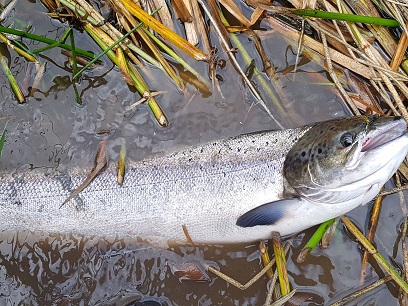
I’m a fair to middling (some might say mediocre) salmon angler. I tie my own flies to a reasonable standard, and can cast a decent line with a single-handed rod, or a fairly poor one with the double-hander. My father, Ger Mulcahy, known to friends and acquaintances in Cork as Gerald, was (I have been told) by contrast, an excellent fly-fisher of salmon. My first salmon on the fly on the River Lee in Cork was on a stretch of water he knew well and fished often, and I felt he was there on the Graveyard stretch that day.
 If you’ve managed teams or organisations for a while, you know there’s invariably one. The team member who gets categorised as “high-maintenance” or sometimes even “highly strung”. They are valuable members of the team, often solid engineers, technologists or other specialists, but they consume a disproportionate amount of your time as a manager.
 Inertia is tough to overcome. We become comfortable, and in becoming comfortable, we become less hungry, more steady state. Energy comes from uncertainty and instability- channeling the energy leads to movement, hopefully in the right direction.
 It’s not news that Shakespeare had
 It’s to be expected, really. You want to go out clubbing, and the object of your affections, who is significantly older than you, wants to get an early night because they have a parent-teacher meeting first thing in the morning.
 I’ve just finished reading Derek Sivers “
 KRIs, KPIs, KRAs, SLAs, OLAs, a smorgasbord of three letter acronyms, all intending to provide meaningful measurement of performance and delivery.